



Product Division · Surfaces
Metal Louvers
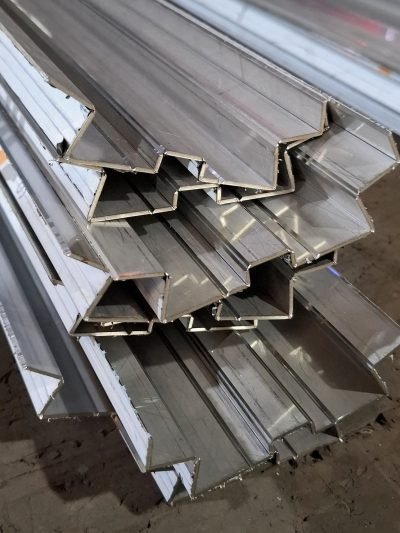
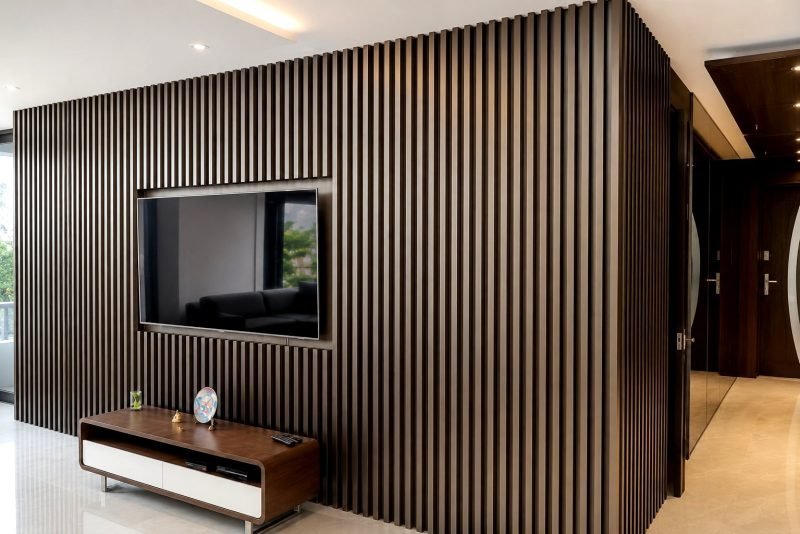
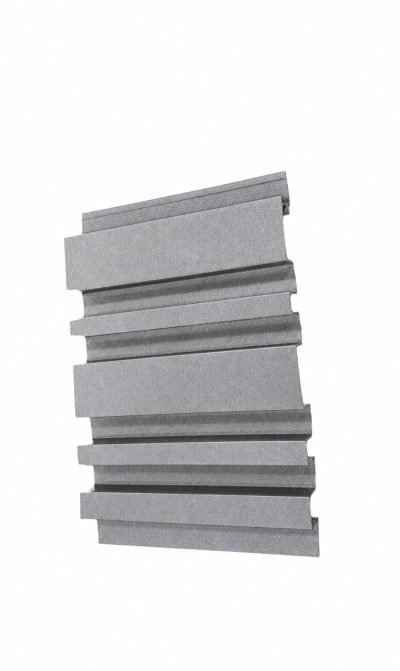
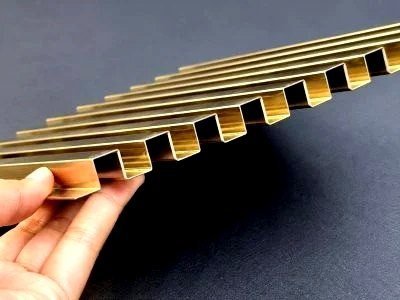
Linear, zig-zag, decorative, aluminium and U-shaped baffle louvers. They go on feature walls and façades, screen a view or hide building services (MEP).
Design it online: Louver PlannerProfile BuilderBOQ Builder


Our USP · CNC V-grooving
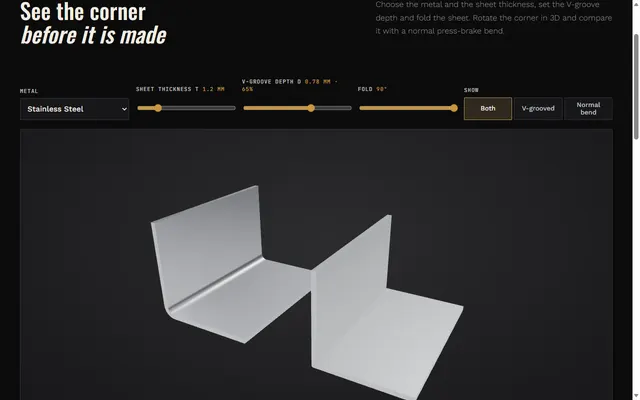
V-grooved or normally bent: the corner in metal louvers
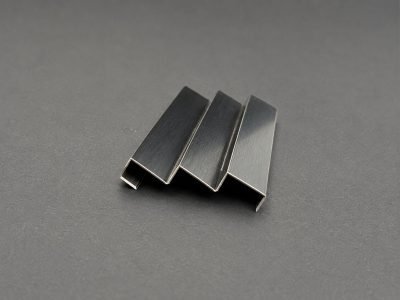
Both fold flat sheet into a section on the same CNC press brake. The difference is one step before the fold: with V-grooving, we first mill a V-shaped groove along the bend line. That one step decides whether the outside corner comes out round or sharp.
In Metal Louvers: The nose and edges of each blade set the rhythm of a louver wall. Sharp V-grooved folds make every blade crisp and identical along its length.
| Aspect | Normal bending | V-grooved, then bent |
|---|---|---|
| Outside corner | Round. The sheet wraps around the tool, so the corner takes a radius. | Sharp, a fine edge. The sheet closes into the groove. |
| Visible face | A tight bend can stretch or mark the face. | The face is not pulled over a tool, so it stays flat. This matters under mirror and hairline finishes. |
| Mitres and returns | Round corners leave gaps to fill and grind at joints. | Joints close tighter, with less to fill and hide before finishing. |
| Cost | Lower: one operation fewer. | Higher: the groove is an extra CNC operation. |
Normal bending is enough for mullions, carrier channels and fixing brackets hidden behind the blades. Where a corner is hidden, we tell you that normal bending is enough and costs less.
V-grooving vs normal bendingSee both corners in 3DHow we V-groove
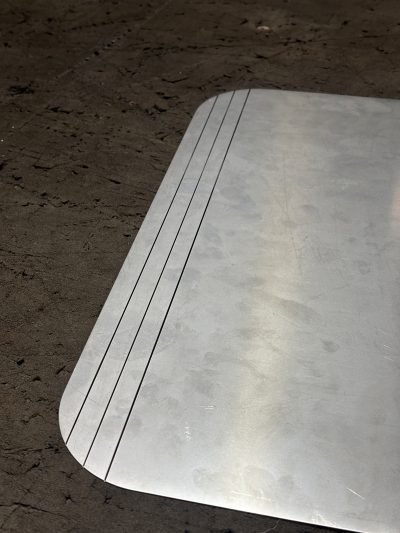
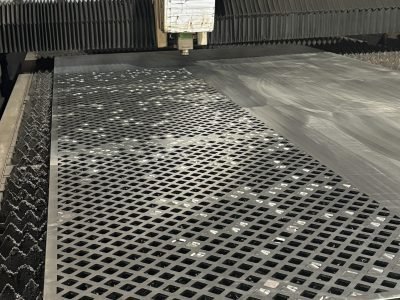
1 · Groove Grooves milled on each bend line 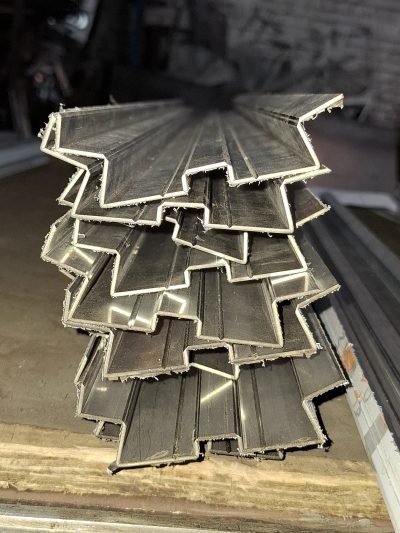
2 · Fold Folded into multi-bend sections 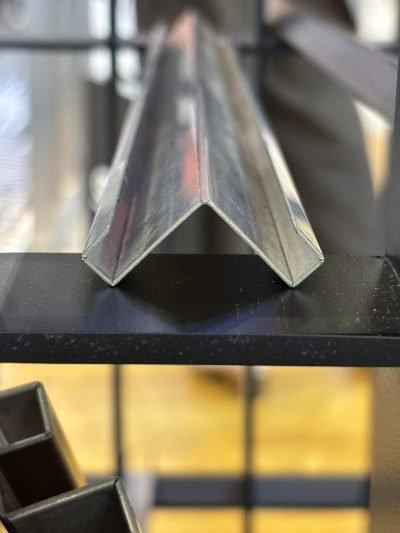
3 · Sharp corner The outside corner closes sharp
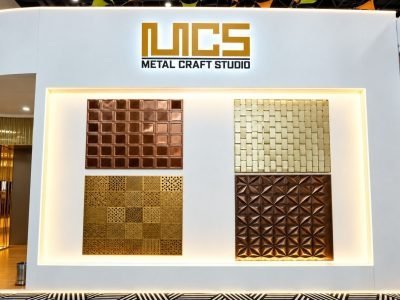
In MCS work
Metal Louvers, in pictures


Downloads
Specification data
Start a project
Working on metal louvers?
Most MCS work starts as a drawing rather than a catalogue number. Send the detail and we will tell you whether it can be produced as drawn.